
TOXICOLOGY

Viewpoints
.jpg)


How are UK drug trends impacting your workplace?

Published July 02, 2026
A series of government reports published throughout 2025 offer a comprehensive view of drug use, related harms, treatment demand, and enforcement activity across the UK. Together, these insights help employers, policymakers, and healthcare professionals understand evolving risks and prepare for the year ahead.
For employers in particular, especially those operating in safety critical environments, these trends provide important context for managing impairment risk, informing policy decisions, and supporting employee wellbeing. Understanding these trends helps organisations assess impairment risk, review policies, and take proactive steps to protect both employees and operations.
UK Drug Use in 2025: Key Statistics
Data released during 2025 highlights multiple dimensions of drug use across the UK, including prevalence, mortality, enforcement, and treatment access.
High level snapshot
- Drug use: 8.7% of adults in England and Wales reported using a drug in the past year.1
- Most common substances: Cannabis (6.5%) and cocaine (2.1%) remain the most frequently reported.1
- Drug-related deaths:
- England & Wales: 5,565 deaths1
- Scotland: 1,017 deaths2
- Northern Ireland: 169 deaths3
- Drug seizures: 13% increase in England and Wales (year ending March 2024).4
- Treatment access: 329,646 people engaged in drug treatment services in England (up 6% year on year).1
What do these drug trends mean for employers?
The 2025 Crime Survey for England and Wales shows that overall drug use remains stable compared to 2024, continuing a long term trend of gradual decline in cannabis use over the past three decades.1 However, stability at a population level does not eliminate risk at an organisational level.
Key implications for employers
- Cannabis and cocaine remain the substances most likely to present workplace risk due to their prevalence.1
- Even infrequent or recreational use can affect judgement, concentration, and reaction time.
- Lower prevalence substances (e.g. ecstasy, ketamine, nitrous oxide) still pose targeted risks in specific demographics or industries.1
Shifting consumption patterns, including the persistence of stimulants such as cocaine, reinforce the need for proportionate but proactive risk controls in the workplace.1
The Real Cost of Workplace Impairment
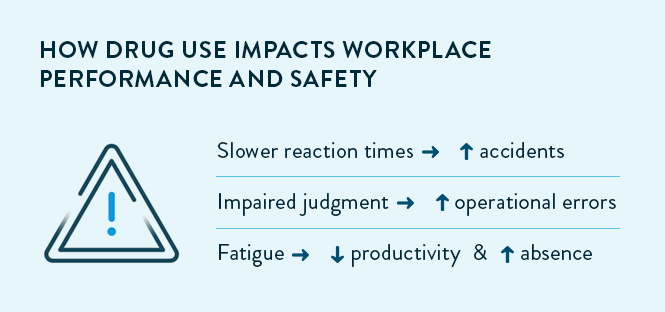
Impairment linked to drug use can carry significant operational consequences, particularly in safety critical or high responsibility roles. These potential impacts can include:
- Increased risk of accidents and near misses
- Reduced productivity and decision making quality
- Higher absenteeism and presenteeism
- Reputational, legal, and compliance risks
- When left unaddressed, these impacts can accumulate into meaningful financial and human cost for organisations.
The Role of Drug and Alcohol Testing at Work
A well constructed drug and alcohol testing programme remains a key tool for managing impairment risk.
Effective programmes can:
- Promote safer working environments
- Deter substance misuse
- Support early identification of risk
- Reinforce health and safety compliance
Common testing approaches employers may consider include:
- Pre employment testing
- Random or unannounced testing
- Post incident testing
- For cause testing
Testing is most effective when clearly communicated, proportionate, and aligned with organisational policy and legal obligations.
Rising Demand for Drug Treatment: A Workplace Perspective
Treatment access data highlights growing demand for support. In the year to March 2025, 329,646 people accessed drug treatment services in England—a 6% increase from the previous year.1
The most common substances associated with treatment entry remain:
- Opioids
- Cocaine
- Cannabis
For employers, this underscores the importance of recognising substance misuse as a health issue, not solely a disciplinary one.
Building a Culture of Care
Testing alone is not sufficient to reduce risk. Organisations that achieve the most sustainable outcomes embed drug and alcohol policies within a broader culture of care.
Key elements include:
- Prevention and education initiatives
- Clear, supportive policies
- Access to confidential support pathways
- Alignment with employee wellbeing programmes
This approach encourages early disclosure, reduces stigma, and supports safer long term outcomes for both employees and organisations.
Emerging Drug Trends Employers Should Watch
Data from Scotland highlights the growing presence of designer benzodiazepines, such as bromazolam, which continue to complicate toxicology profiles and increase overdose risk.2
Employer checklist
- Monitor emerging substance trends
- Review testing panels where appropriate
- Ensure education materials remain current
- Maintain links to occupational health and specialist support services
Ongoing vigilance will be critical as synthetic and novel substances continue to evolve.2
Looking Ahead: What Employers Should Do Next
UK drug trends may appear stable at a national level, but the impact on individual organisations, particularly those operating in safety critical or high responsibility environments, remains significant. The data from 2025 reinforces a familiar message: workplace impairment risk has not disappeared, and complacency can be costly.
Employers that respond most effectively are those who regularly review their approach, stay informed about emerging substances, and ensure that drug and alcohol policies remain practical, proportionate, and aligned with both legal obligations and employee wellbeing.
A combination of informed policy design, clear communication, access to support, and targeted testing can help organisations manage risk while maintaining trust and fairness across the workforce.
References
- Office for National Statistics. Drug misuse in England and Wales: year ending March 2025. Published December 11, 2025. Accessed January 21, 2026. https://www.ons.gov.uk/peoplepopulationandcommunity/crimeandjustice/articles/
drugmisuseinenglandandwales/yearendingmarch2025
- National Records of Scotland. Drug‑related deaths in Scotland, 2024. Published September 2, 2025. Accessed January 21, 2026. https://www.nrscotland.gov.uk/publications/drug-related-deaths-in-scotland-2024/
- Northern Ireland Statistics and Research Agency. Drug‑related deaths, Northern Ireland. Published May 12, 2025. Accessed January 21, 2026. https://www.nisra.gov.uk/publications/drug-related-and-drug-misuse-deaths-2013-2023
- Home Office. Seizures of drugs in England and Wales, financial year ending 2024. Updated February 13, 2025. Accessed January 21, 2026. https://www.gov.uk/government/statistics/seizures-of-drugs-in-england-and-wales-financial-year-ending-2024#full-publication-update-history